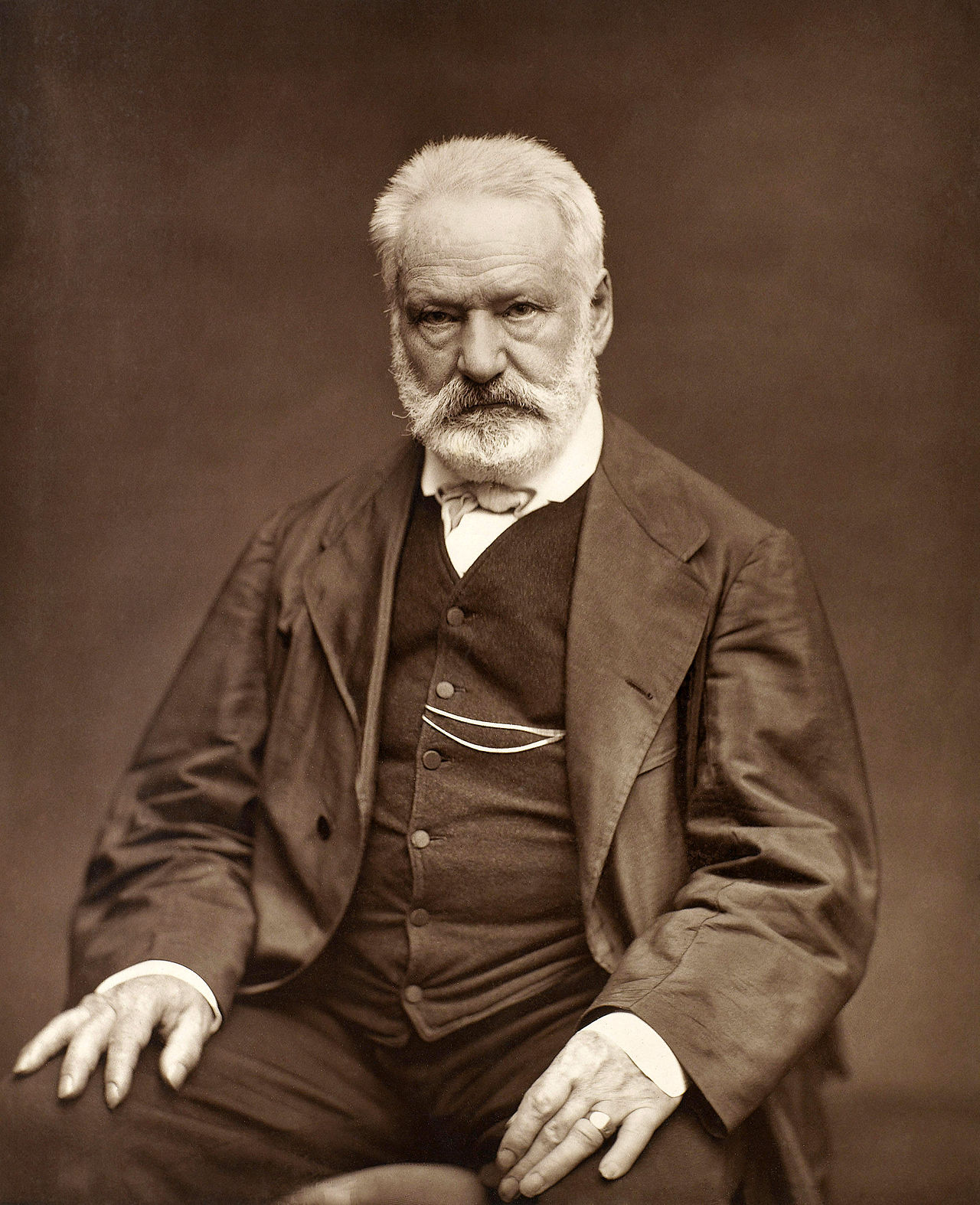
Victor Hugo's Luminous Farewell: Exploring Les Rayons et les Ombres Before Exile
In the illustrious tapestry of French literature, few figures cast a shadow as grand and enduring as Victor Hugo. Among his vast and varied oeuvre, Les Rayons et les Ombres stands as a pivotal collection, a poetic beacon published in 1840 that not only showcases his evolving mastery of verse but also marks a significant turning point in his life. This was Hugo's final poetic work before the crucible of his self-imposed exile in the aftermath of the 1851 coup, a collection that distills a decade of profound personal and societal observation into forty-four remarkable poems. It is here that the young, celebrated Romantic poet begins to truly articulate the voice of a prophet, foreshadowing the grand humanitarian vision that would define his later years.
The Duality at the Heart of Les Rayons et les Ombres
The very title, Les Rayons et les Ombres (Beams and Shadows), encapsulates the central thematic tension of the collection. It speaks to the inherent duality of existence, the interplay of light and darkness, joy and sorrow, enlightenment and obscurity that permeates human experience. This is not merely a poetic device but a profound philosophical inquiry into fate, cosmic order, and the human condition. Hugo masterfully employs vivid imagery of light and shadow, not just as decorative elements, but as conduits for metaphysical contrasts, exploring how these opposing forces shape individual lives and broader society.
For readers, understanding this duality is key to unlocking the collection's depth. The "rayons" represent moments of clarity, hope, love, and intellectual brilliance, while the "ombres" delve into despair, doubt, social injustice, and the mysteries of the unknown. These poems invite us to contemplate our own lives through this lens, recognizing that brilliance often emerges from struggle, and that even in the deepest shadows, a glimmer of light can persist. It's a reminder that life is rarely monochromatic; rather, it is a rich tapestry woven from contrasting threads.
A Poet Amidst Political Tensions: The July Monarchy Backdrop
Published in 1840, during the height of the July Monarchy (1830–1848), Les Rayons et les Ombres emerged from a period of relative political stability in France, yet one simmering with growing social and economic tensions. Victor Hugo, then 38 years old, was far from an obscure figure. He was a prominent literary titan, already honored with the Legion of Honor in 1837, and would soon be elected to the prestigious Académie Française in 1841. This era saw Hugo's deepening engagement with social issues, evidenced by his prior outspoken opposition to capital punishment, setting the stage for the more fervent political critiques of his later years.
The July Monarchy, characterized by its bourgeois governance under King Louis-Philippe, presented a curious paradox: outward calm coexisting with the internal tremors of industrial expansion and increasing class discontent. Hugo's poetry in Les Rayons et les Ombres subtly captures this socio-political climate. While not overtly polemical, the philosophical inquiries into human fate and societal structures often echo the anxieties and aspirations of the time. The collection acts as a barometer of a nation undergoing significant transformation, viewed through the perceptive eyes of its greatest poet. This rich tapestry of societal observation and personal reflection is deeply explored in our related piece, Victor Hugo's Rayons et les Ombres: Duality and Prophetic Vision.
Forging Romanticism: A Masterpiece in Literary Evolution
In the vibrant literary landscape of 19th-century France, Les Rayons et les Ombres solidified Hugo’s reputation as a versatile master of verse and a defining voice of French Romanticism. Hugo had, in fact, been instrumental in shaping the movement, most notably through his incendiary 1827 preface to Cromwell, which articulated Romanticism's rejection of classical unities, and the tumultuous 1830 premiere of Hernani, which ignited a literal "battle" between traditionalists and innovators.
Building upon earlier poetic volumes like Les Orientales (1829), known for its exoticism, and Les Feuilles d'automne (1831), which delved into personal introspection, Les Rayons et les Ombres represents a significant maturation of Hugo's style. It perfectly exemplifies Romantic poetry's dual focus: combining profound lyrical subjectivity with expansive philosophical inquiry. Here, personal elegies—often rooted in his stable family life with Adèle Foucher and their children, like his beloved Léopoldine—seamlessly blend with broader explorations of existence. The collection's critical success likely contributed to his Académie Française election, recognizing his unparalleled contribution to French letters. To delve further into how this collection solidified Hugo’s place within the movement, read our companion article: Les Rayons et les Ombres: Hugo's Romantic Masterpiece of 1840.
From Personal Elegy to Poet-Prophet
One of the most striking developments evident in Les Rayons et les Ombres is Hugo's emergence as a "poet-prophet." Biographers note that this collection marks the first clear appearance of Hugo assuming a role beyond that of a mere lyricist—he becomes a voice whose function is to "instruct kings and peoples about the problems of life." This is where Hugo begins to realize his ambition to be what he called a "sonorous echo," translating the murmurs of society and the grand questions of humanity into resonant verse.
While the poems retain a deeply personal touch, infused with the joys and sorrows of his domestic life, they transcend mere autobiography. Hugo uses personal experience as a springboard for universal truths, bridging the intimate with the epic. He shifts from merely expressing emotions to articulating profound insights into the moral and political dimensions of his era. This prophetic vision, weaving together personal experience with expansive philosophical and social commentary, makes Les Rayons et les Ombres not just a collection of beautiful poems, but a blueprint for the literary and social activism that would define the rest of his formidable career, culminating in masterpieces like Les Misérables.
For aspiring writers and readers, this evolution is a powerful lesson: true literary impact often comes from broadening one's scope, using the personal as a lens for the universal, and daring to speak truth to power. Hugo demonstrates that poetry can be both deeply personal and profoundly public, a mirror reflecting the soul and a trumpet announcing societal challenges.
Conclusion: A Lasting Legacy Before the Storm
Les Rayons et les Ombres remains a testament to Victor Hugo’s unparalleled poetic genius and his profound intellectual curiosity. Published just over a decade before his forced exile, it serves as a crucial bridge, connecting the celebrated Romantic lyricist of the 1830s with the impassioned political voice and humanitarian champion he would become. The collection’s exploration of duality, its astute reflection of the July Monarchy, and its pioneering role in shaping Romanticism collectively mark it as an indispensable work. It is here that Hugo’s style matures, his philosophical inquiries deepen, and his voice begins to resonate with a prophetic power that would forever change the course of French literature. To engage with Les Rayons et les Ombres is to witness a master poet at a critical juncture, poised on the precipice of profound personal and historical change, casting light and shadow upon the enduring mysteries of life.